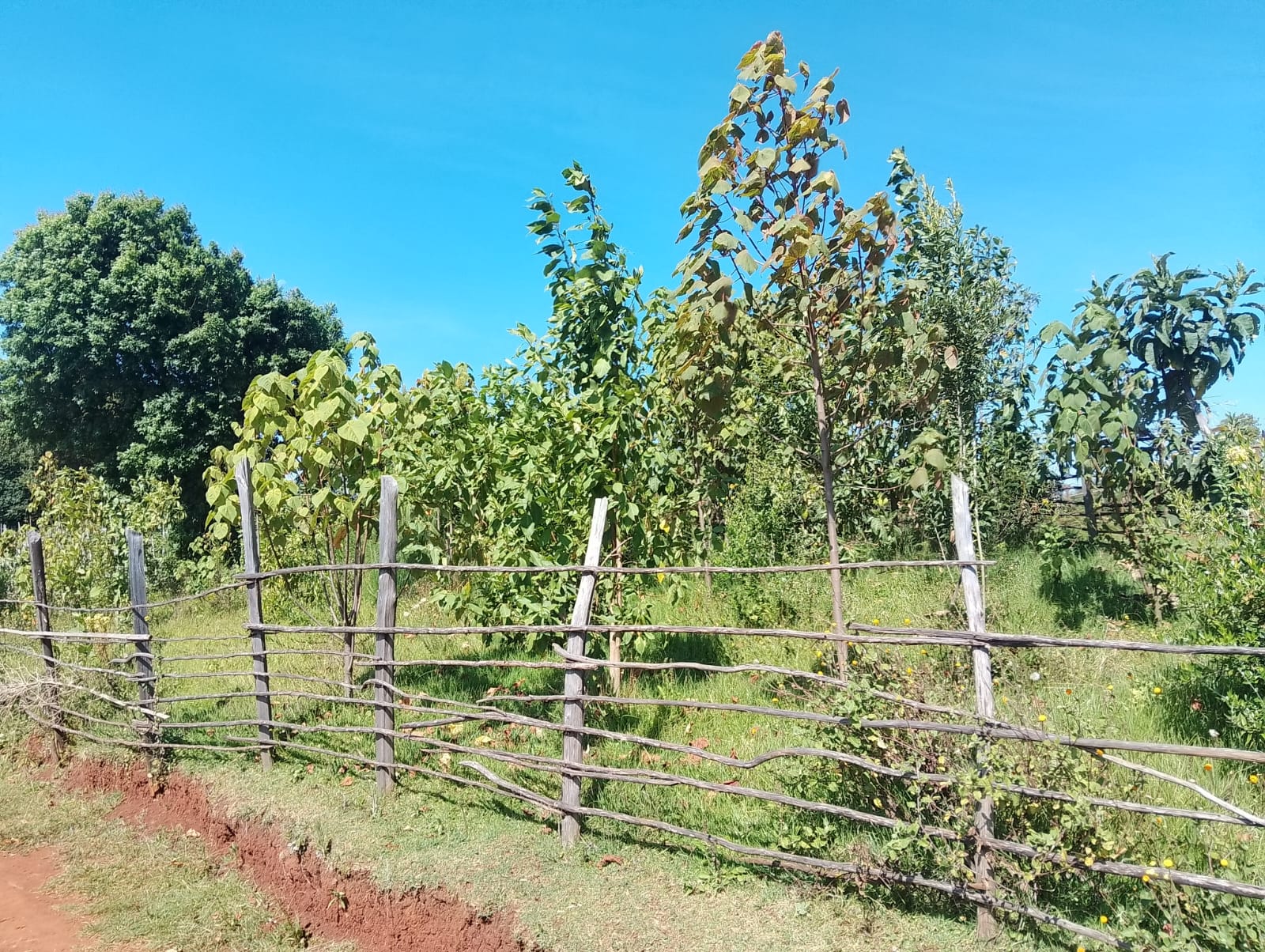
For generations, farmers across Kenya have relied on the land to sustain their families and communities. But with growing populations, declining soil fertility, and the worsening effects of climate change, traditional farming practices are struggling to keep pace. Agroforestry—integrating trees into farmland—offers a way forward. It blends agriculture and forestry into a system that improves productivity while restoring degraded ecosystems. At Guardians of Nature & People (GNP), we see agroforestry not only as a farming technique but also as a nature-based solution that bridges the gap between human needs and environmental health.
Why Agroforestry Matters
Agroforestry provides a range of benefits that go far beyond the farm gate. Trees improve soil fertility by fixing nitrogen, reducing erosion, and enhancing water retention. They offer shade and windbreaks, which increase crop yields and protect livestock. Certain tree species provide fodder, fruit, timber, and fuelwood, diversifying farmers’ sources of income. Agroforestry systems also capture significant amounts of carbon, making them an important tool in the fight against climate change. According to the World Agroforestry Centre (ICRAF), integrating trees into farms can increase household income by up to 30 percent while improving resilience to droughts and floods.
GNP’s Approach to Agroforestry
Our agroforestry initiatives are designed to support smallholder farmers in adopting sustainable land use practices. We shall provide training on selecting the right tree species for local conditions, managing nurseries, and integrating trees into crop and livestock systems. Beyond training, we shall facilitate access to high-quality seedlings and create demonstration plots where farmers can see the benefits firsthand. By working with women, youth, and marginalized groups, we ensure that agroforestry is inclusive and that its benefits are widely shared.
Building Climate Resilience
Agroforestry strengthens communities against climate risks. Trees on farms act as carbon sinks, helping to reduce greenhouse gas emissions. At the same time, they stabilize local microclimates, improve soil structure, and reduce dependence on chemical fertilizers. In places like Narok and Kiambu, where unsustainable farming has degraded land, agroforestry offers a pathway to restore soil health while maintaining food security. For farmers facing unpredictable rainfall, agroforestry provides a safety net by diversifying crops and income sources.
Linking Local Action to Global Goals
The benefits of agroforestry resonate far beyond individual farms. By promoting agroforestry, GNP contributes to Kenya’s National Climate Change Action Plan, the Forest Conservation and Management Act, and the Agricultural Sector Transformation and Growth Strategy. At the global level, agroforestry supports the UN Decade on Ecosystem Restoration and several Sustainable Development Goals, including zero hunger, climate action, and life on land. This makes agroforestry not just a farming practice, but a contribution to building a more sustainable and resilient planet.
Farmers as Stewards of the Land
Perhaps the most inspiring aspect of agroforestry is how it transforms farmers into stewards of the land. By planting and nurturing trees, farmers invest not only in their own futures but also in the health of their communities and ecosystems. At Guardians of Nature & People, we are proud to walk alongside farmers in this journey, demonstrating that the solutions to our biggest challenges often grow from the ground up.